TITLE: Silk Kilim (Gilīm)
ORIGIN: Center of Iran, probably Kashan, Isfahan Province
EOCH. PERIOD: Safavid Empire, Iran
DATE: Beginning of the 17th Century
MATERIAL: Silk
DIMENSIONS: 227 x 131 cm (89 x 52 in.)
- Warp of Silk
- Weft of Silk and Gold and Silver threads
LOCATION: Collection of the George Washington University Museum (The Textile Museum), Washington D.C, USA
NOTE:
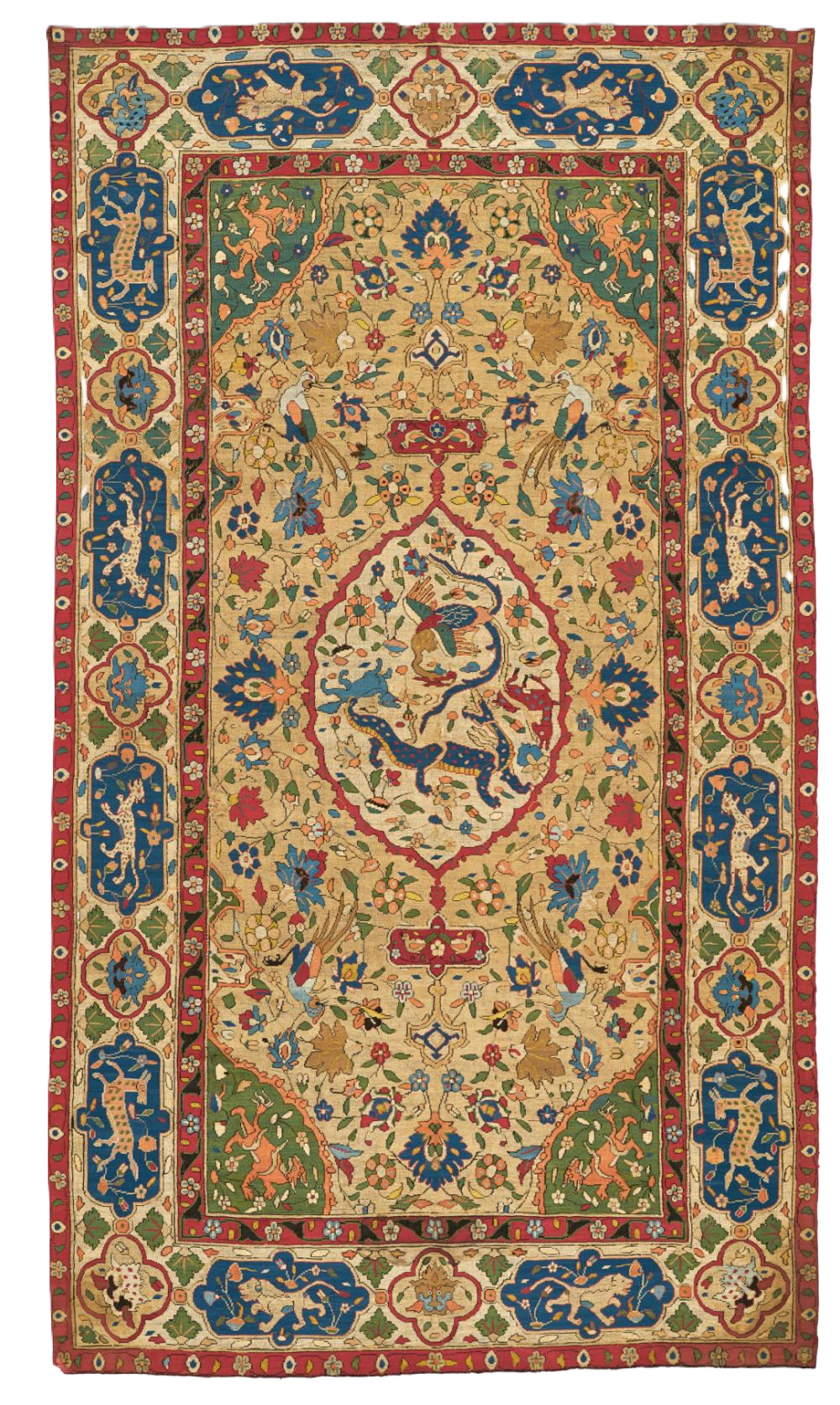
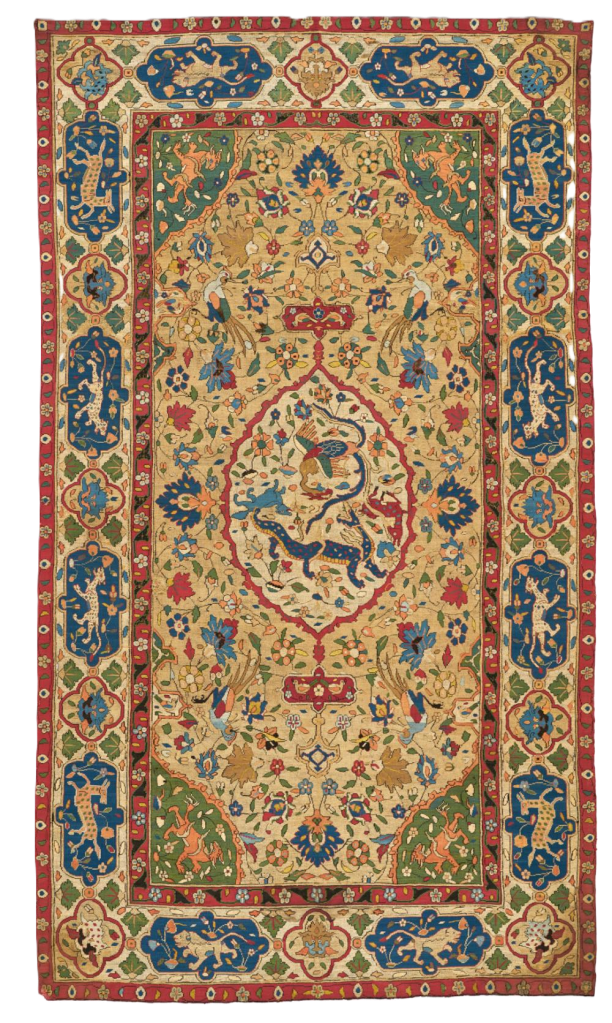
This exquisite Gilīm showcases a central “Toranj” pattern, within which a dramatic scene unfolds—a Simorgh and a dragon engaged in combat. The symmetrical background features four flying birds woven into each side of the “Toranj.” At the top and bottom, two red frames house pairs of ducks, while the remaining sides boast palm leaf patterns. The Chinese artistic influence on Iranian art during the Safavid period is evident in the Gilīm weaving, with four Qilin, mythical creatures from Southeast Asia, depicted in the green-hued corners.
The border of this Gilīm presents frames containing various animals such as lions, tigers, and gazelles. Within these frames, “Toranj” patterns are woven, each revealing the heads of additional animals. A carpet with a similar pattern is preserved in the Museum of Islamic Art in Berlin (Museum für Islamische Kunst), underscoring the historical significance and artistry of this Gilīm.
 Ghalin History
Leave a comment